

Technology The Power Driving the Modern World

In the modern era, technology has become the foundation of progress and innovation. From smartphones and computers to artificial intelligence and smart homes, technology shapes how people live, work, communicate, and learn. Every day, new technological advancements make life easier, faster, and more efficient. Whether it is sending a message across the world in seconds, attending online classes, or managing businesses digitally, technology has transformed everyday experiences.
It has also opened doors to global opportunities, allowing people to collaborate, share knowledge, and solve complex problems. As industries continue to evolve, the influence of technology becomes even stronger. Understanding the role of technology in modern society helps us appreciate how innovation drives development and improves quality of life around the world.
Technology refers to the application of scientific knowledge and tools to solve problems and improve human life. Over the years, technology has evolved from simple tools used by early humans to highly advanced systems powered by computers, artificial intelligence, and digital networks.
Today, technology plays a crucial role in almost every field, including education, healthcare, business, transportation, and communication. It allows people to perform tasks more efficiently, access information instantly, and connect with others globally.
As society continues to advance, technology remains a key driver of innovation, helping individuals and organizations achieve greater productivity and progress.
Technology is not just about machines or devices; it is about creating solutions that improve human life. From the invention of the wheel to modern digital innovations, technology has continuously shaped the development of civilization.
In the digital age, new technologies such as artificial intelligence, cloud computing, robotics, and automation are transforming industries and creating new opportunities. These innovations are helping businesses grow, improving healthcare systems, and making education more accessible worldwide.
In this article, we will explore the meaning of technology, its evolution, types, benefits, challenges, and the future impact it may have on society.
What is Technology
Technology refers to the use of scientific knowledge, tools, machines, and systems to solve problems and make human life easier and more efficient. It involves creating and using innovations that help people perform tasks faster, improve productivity, and enhance everyday activities. Technology can be found in many forms, from simple tools used in the past to advanced digital systems used today.
Examples of modern technology include computers, smartphones, the internet, artificial intelligence, and smart devices. These tools help people communicate, learn, work, and access information quickly. Technology also plays an important role in fields such as education, healthcare, transportation, and business, improving services and creating new opportunities.
Over time, technology has continued to evolve, becoming more advanced and accessible. Today, it is a key part of modern society, supporting innovation and helping individuals and organizations achieve greater progress and efficiency in their daily lives.
Technology is used in many areas of life, including communication, education, healthcare, and entertainment. Examples include:
- Computers and smartphones
- Internet and digital platforms
- Artificial intelligence systems
- Transportation technologies
- Medical equipment
These technologies help people perform tasks more efficiently and improve productivity.
Evolution of Technology
The evolution of technology shows how human innovation has developed over time to improve daily life. In ancient times, people used simple tools made from stone, wood, and metal to hunt, build shelters, and perform basic tasks. These early inventions were the foundation of technological progress.
As civilizations grew, new technologies were created in areas such as agriculture, transportation, and communication. The Industrial Revolution introduced machines, factories, and mass production, which greatly increased productivity and transformed economies.
In the late 20th century, the digital revolution changed the world by introducing computers, the internet, and mobile communication. These innovations allowed people to share information quickly and connect globally.
Today, modern technology includes artificial intelligence, robotics, cloud computing, and smart devices. These advancements continue to shape industries, improve efficiency, and create new opportunities. The ongoing evolution of technology ensures that it will remain a key driver of progress in the future.
Ancient Technology
Ancient technology refers to the simple tools and inventions created by early humans to solve everyday problems. Examples include stone tools, farming equipment, and basic shelters. These innovations helped people survive, grow food, and build the foundations of early civilizations.
Industrial Revolution
The Industrial Revolution was a major period of technological change that introduced machines, factories, and mass production. It transformed industries, increased manufacturing efficiency, and improved transportation and communication, shaping the foundation of modern industrial society.
Digital Age
The Digital Age is the modern period defined by computers, the internet, and digital communication. It enables fast information sharing, online services, and global connectivity. This era has transformed how people work, learn, communicate, and access knowledge worldwide.
Types of Technology
There are several types of technology, each designed to serve different purposes in modern society. One of the most common is Information Technology (IT), which includes computers, software, and data management systems used to store, process, and share information. IT plays a major role in business, education, and communication.
Another important type is Communication Technology, which allows people to connect through smartphones, the internet, emails, and video calls. This technology helps individuals and organizations communicate quickly across long distances.
Medical Technology is also essential for improving healthcare. It includes advanced equipment such as diagnostic machines, medical imaging tools, and surgical devices that help doctors treat patients more effectively.
In addition, Transportation Technology improves travel through modern vehicles, navigation systems, and faster transportation networks. Educational Technology supports learning through digital platforms, online classes, and interactive teaching tools.
Together, these technologies improve efficiency, productivity, and the quality of life in modern society.
1. Information Technology
Information Technology (IT) involves the use of computers, software, and networks to store, process, and share information. It supports businesses, education, and communication by improving data management, productivity, and digital connectivity in the modern world.
2. Communication Technology
Communication Technology enables people to connect and share information quickly through smartphones, emails, video calls, and social media platforms. It helps individuals and businesses communicate globally, improving collaboration, relationships, and access to information in today’s digital world.
3. Medical Technology
Medical Technology includes advanced tools and equipment used to diagnose, monitor, and treat diseases. Devices like scanners, surgical machines, and health monitoring systems help doctors provide accurate treatment and improve patient care and healthcare outcomes.
4. Transportation Technology
Transportation Technology includes modern vehicles and systems that improve travel and logistics. Innovations like high-speed trains, electric cars, GPS navigation, and smart traffic systems make transportation faster, safer, and more efficient for people and businesses worldwide.
5. Educational Technology
Educational Technology uses digital tools like computers, online platforms, smart boards, and virtual classrooms to enhance learning. It helps students access resources, attend online classes, and improve skills, making education more interactive, flexible, and accessible worldwide.
Benefits of Technology
The benefits of technology are wide-ranging and have greatly improved modern life. One major benefit is enhanced communication, allowing people to connect instantly through smartphones, emails, and video calls. Technology also increases productivity by helping businesses automate tasks, manage data, and operate efficiently.
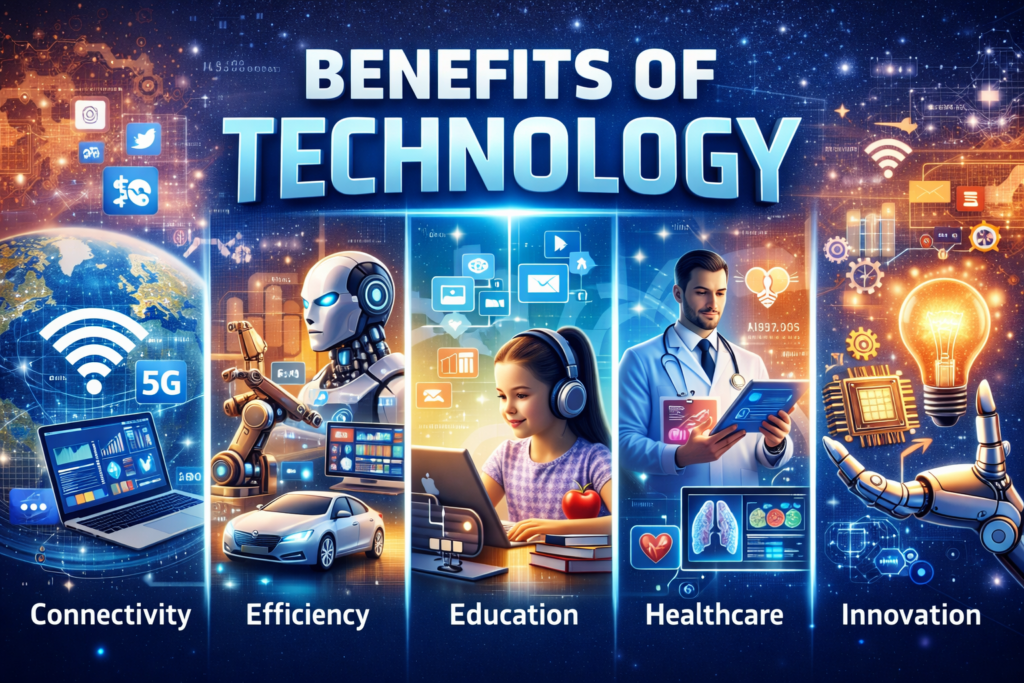
In education, technology provides access to online learning platforms, digital resources, and virtual classrooms, making education more flexible and accessible. In healthcare, advanced medical equipment and digital systems improve diagnosis, treatment, and patient care.
Technology also supports global connectivity, enabling people and organizations to collaborate worldwide. It enhances entertainment through streaming services, games, and social media platforms. Additionally, technology promotes innovation, creativity, and economic growth.
Overall, technology simplifies daily tasks, saves time, and improves the quality of life. When used responsibly, it becomes a powerful tool that supports progress, development, and success in personal and professional life.
1. Improved Communication
Improved Communication is one of the main benefits of technology. It allows people to connect instantly through messages, emails, video calls, and social media. This helps families, friends, and businesses stay connected anytime, anywhere in the world.
2. Increased Productivity
Increased Productivity is a key benefit of technology. Digital tools and automation help individuals and businesses complete tasks faster and more efficiently. Technology saves time, reduces errors, and improves workflow, leading to better performance and higher overall results.
3. Access to Information
Access to Information is a major benefit of technology. The internet provides instant knowledge, research materials, and educational resources. People can learn new skills, stay updated with news, and find solutions quickly from anywhere in the world.
4. Healthcare Improvements
Healthcare Improvements are possible due to advanced technology. Modern medical devices, diagnostic tools, and digital systems help doctors detect diseases early and provide better treatment. Technology enhances patient care, accuracy, and overall health services in hospitals and clinics.
5. Global Connectivity
Global Connectivity is a key advantage of technology. Devices like smartphones, computers, and the internet allow people to communicate, collaborate, and share information worldwide, breaking geographical barriers and creating opportunities for personal, educational, and business connections.
Technology in Education
Technology in Education has transformed the way students learn and teachers teach. Digital tools such as computers, tablets, smart boards, and online learning platforms make lessons more interactive and engaging. Students can access a wide range of educational resources, e books, videos, and research materials anytime and anywhere.
Online classes and virtual classrooms allow learners to continue their education without being physically present in a school or university. This flexibility is especially helpful for remote areas and working students. Technology also supports personalized learning, enabling students to study at their own pace and improve their understanding of difficult subjects.
Teachers benefit from technology by using digital presentations, online assessments, and communication tools to manage classrooms effectively. Additionally, technology encourages collaboration through group projects, discussions, and educational apps.
Overall, technology enhances accessibility, efficiency, and quality of education, making learning more convenient, innovative, and suitable for the modern world.
Technology in Business
Technology in Business plays a vital role in improving efficiency, communication, and overall performance. Modern companies use computers, software, and digital tools to manage operations, analyze data, and make informed decisions. These technologies help businesses save time, reduce errors, and increase productivity.
Digital marketing platforms allow companies to reach customers globally through social media, websites, and online advertisements. This expands market opportunities and improves brand visibility. Communication tools such as emails, video conferencing, and messaging apps enable smooth collaboration between teams, even in different locations.
Technology also supports data management and customer relationship systems, helping businesses understand customer needs and provide better services. Automation systems improve manufacturing processes and reduce operational costs.
Additionally, online payment systems and e-commerce platforms make transactions easier and more secure. Overall, technology helps businesses grow, compete in global markets, and deliver high-quality products and services efficiently.
Challenges of Technology
While technology offers many benefits, it also presents several challenges in modern society. One major challenge is digital addiction, where excessive use of devices can affect mental health, productivity, and personal relationships. People may spend too much time on screens, reducing face-to-face interaction.
Another important issue is privacy and security risks. With increasing online activities, personal data can be exposed to cyber threats, hacking, and identity theft. Strong security measures are necessary to protect sensitive information.
Technology can also lead to job displacement due to automation and artificial intelligence replacing certain manual tasks. This creates concerns about employment opportunities in some industries.
Additionally, the high cost of advanced devices and frequent updates can be challenging for individuals and businesses. Technical problems, system failures, and dependency on the internet are other common issues.
Therefore, while technology is powerful and useful, it must be used responsibly to minimize risks and maximize benefits.
Digital Addiction
Digital Addiction occurs when people spend excessive time on smartphones, computers, or social media. It can affect mental health, productivity, and relationships. Maintaining balance and setting screen time limits helps reduce dependency and promotes healthier technology use.
Privacy Risks
Privacy Risks happen when personal information is exposed online due to weak security or cyber attacks. Hackers may steal data, passwords, or financial details. Using strong passwords and secure systems helps protect sensitive information and maintain digital safety.
Job Displacement
Job Displacement occurs when automation and advanced technology replace certain human jobs. Machines and AI can perform tasks faster and more efficiently, reducing employment in some sectors. However, technology also creates new opportunities and skill-based careers.
Future of Technology
The future of technology is expected to bring remarkable innovations that will transform every aspect of life. Advancements in artificial intelligence, robotics, cloud computing, and automation will make systems smarter, faster, and more efficient. These technologies will improve healthcare, education, transportation, and business operations worldwide.
In the coming years, smart devices and connected systems will become more integrated, creating intelligent homes, cities, and workplaces. Self-driving vehicles, advanced medical tools, and personalized digital assistants will become more common. Technology will also focus on sustainability and energy efficiency, helping reduce environmental impact and support green solutions.
Furthermore, improvements in cybersecurity will protect personal data and ensure safer online experiences. The expansion of high-speed internet and global connectivity will continue to bridge communication gaps between countries.
Overall, the future of technology promises innovation, convenience, and growth, shaping a more connected, intelligent, and advanced world for future generations.
Frequently Asked Questions
What is technology?
Technology is the use of tools and knowledge to solve problems and improve life.
Why is technology important?
It improves communication, productivity, and access to information.
What are examples of technology?
Computers, smartphones, internet, and medical equipment.
How does technology help education?
It enables online learning, digital resources, and global access to knowledge.
What is the future of technology?
AI, robotics, and automation will shape future technological advancements.
Conclusion
In conclusion, technology has become one of the most powerful forces shaping the modern world. From ancient tools to advanced digital systems, its evolution has transformed how people live, communicate, learn, and work. Today, technology influences almost every field, including education, healthcare, business, transportation, and entertainment. It improves efficiency, increases productivity, and provides instant access to information and global communication.

The benefits of technology are undeniable. It enables fast communication, supports innovation, enhances learning opportunities, and improves healthcare services. Businesses use technology to grow and compete in global markets, while students rely on digital platforms for flexible and interactive education. Technology also promotes creativity, collaboration, and economic development.
However, alongside its advantages, technology presents certain challenges such as digital addiction, privacy risks, job displacement, and security concerns. These issues highlight the importance of responsible and balanced use. When used wisely, technology becomes a tool for progress rather than a source of problems. Practicing healthy digital habits, protecting personal data, and maintaining real-life interactions are essential steps toward sustainable use.
Looking ahead, the future of technology appears promising with innovations in artificial intelligence, robotics, automation, and smart systems. These advancements will continue to improve daily life and create new opportunities worldwide.
Ultimately, technology is not just about devices or machines it is about improving human potential and building a better future. By embracing innovation responsibly, society can ensure that technology remains a positive and transformative force for generations to come.