

Wells Fargo Google Cloud AI Agents
Artificial intelligence (AI) is changing the world fast, and banks are among the biggest adopters of this technology Wells Fargo Google Cloud AI Agents. One of the most exciting developments in AI and banking is how Wells Fargo, a major U.S. bank, is using Google Cloud AI agents to transform its business and Wells Fargo Google Cloud AI Agents.
In this article, Wells Fargo Google Cloud AI Agents we will explore what this means, how it works, real-world use cases, benefits, challenges, and what the future may hold.
AI agents are computer programs that can perform tasks on behalf of people. Unlike simple chatbots that only answer questions, AI agents can:
- Search and summarize information
- Automate workflows
- Learn from data
- Help employees and customers make decisions
When these AI agents are built on a cloud platform like Google Cloud, they can work at scale, securely, and across many business functions.
For a major bank like Wells Fargo, adopting AI agents can be a game-changer helping improve efficiency, service quality, and innovation.
What Is the Wells Fargo and Google Cloud AI Agents Partnership?
In 2025-2026, Wells Fargo announced a strategic expansion of its relationship with Google Cloud to deploy what the tech world calls agentic AI meaning AI that can act with autonomy and assist humans in complex work Wells Fargo Google Cloud AI Agents.
What It Means
Wells Fargo is using Google Agentspace,Wells Fargo Google Cloud AI Agents a secure cloud platform from Google Cloud, to build, manage, and run AI agents in its workforce. These agents help employees find information faster, handle routine work, and deliver better customer service.
Why It’s Important
- AI is now part of core banking workflows
- Employees receive faster insights
- Customers get more personalized support
- Routine work becomes automated
How Google Cloud AI Agents Work at Wells Fargo
To understand the impact, we need to know how these AI agents work. They are not “magic robots” but intelligent software tools that do jobs normally done by humans.
AI Agents at Work-Key Functions
1. Automated Information Analysis
AI agents can read and summarize thousands of pages of documents in minutes. For example:
A financial contract with 250,000+ pages can be scanned for key clauses in seconds instead of hours.
2. Customer Support Automation
AI agents can handle customer tasks such as:
- Replacing a lost debit card
- Answering balance questions
- Providing real-time support online
This increases service speed and reduces wait times.
3. Market Insights for Employees
Bank staff can ask AI agents for:
- Current market trends
- Foreign exchange data
- Competitive analysis
This saves time and improves decisions.
4. Workflow Automation
Routine internal tasks can be automated, allowing employees to focus on higher-value work, like customer relationships and strategy.
AI Agents in Action
Here are concrete examples of how these AI agents are making a difference inside Wells Fargo:
Contract Analysis at Scale
At Wells Fargo, certain teams deal with hundreds of thousands of vendor agreements and contracts every year.
Before AI:
- Employees manually located information
- Time spent on routine tasks took hours or days
After AI Agents:
- Agent scans documents automatically
- Key clauses are extracted instantly
- Employees spend time on high-level strategy instead of paperwork
This kind of automation saves hundreds of hours of manual work.
Supporting Customer Services
Instead of long queues or waiting on calls:
AI agents can:
- Provide answers instantly online
- Handle repetitive tasks 24/7
- Give personalized recommendations
This improves customer satisfaction and loyalty.
Employee Productivity
AI agents help bankers and support staff:
- Navigate complex internal documents
- Get market insights faster
- Automate dashboards & reports
Employees are more productive and satisfied because they can focus on creative work, not manual tasks.
Benefits of Using Google Cloud AI Agents at Wells Fargo
AI agents are powerful tools, but what does that mean in real business terms?
Here are the major benefits:
Improved Efficiency and Productivity
AI handles repetitive tasks so employees can work faster and smarter.
✔ Less manual workload
✔ Faster results
✔ More time for meaningful work
Better Customer Experience
Customers can get help anytime, not just during business hours.
Personalized recommendations
Quick responses
Improved satisfaction
Data-Driven Decisions
AI agents provide insights based on real data:
- Market trends
- Customer behavior
- Contract analysis
This leads to more informed decision-making.
Workforce Enablement
Employees across departments from branch bankers to investment teams can use AI in their daily work seamlessly.
Challenges and Responsible AI Use
Using AI in a bank also comes with concerns.
Balancing AI with Human Oversight
AI agents make work easier, but humans still need to:
- Verify critical decisions
- Ensure compliance with laws and regulations
- Monitor for errors
Data Security and Privacy
Using AI with financial data means:
- Strong security measures
- Protected customer information
- Responsible use of sensitive data
Wells Fargo and Google Cloud emphasize responsible AI practices to protect users.
Training and Change Management
Employees must learn to work with AI:
- Training for staff
- New processes at scale
Wells Fargo has invested millions to train thousands of employees on AI tools and workflows.
Tips for Companies Considering AI Agent Adoption
If another company wants to adopt AI agents like Wells Fargo, here are practical tips:
1. Start Small and Scale Gradually
Begin with a pilot program for one team, evaluate results, then expand.
2. Train Employees Early
AI works best when staff know how to use it confidently.
3. Apply Ethical AI Principles
Always ensure data privacy and follow local regulations.
4. Align AI with Business Goals
AI deployments should serve strategic goals not just technology for technology’s sake.
The Future of AI in Banking
AI agents are just the beginning.
Emerging Trends
- More automation in customer service
- AI-driven financial advice
- Predictive analytics for risks
- Personalized banking solutions
Banks that innovate with AI may lead the next decade of financial services growth.
Frequently Asked Questions
1. What exactly are AI agents?
AI agents are intelligent programs that can perform tasks, find information, automate work, and assist people in decision making.
2. Why did Wells Fargo choose Google Cloud?
Wells Fargo chose Google Cloud because of its secure platform, strong AI tools like Agentspace, and ability to manage AI agents at enterprise scale.
3. Will AI replace bank employees?
AI is designed to assist employees, not replace them. It frees workers from routine tasks so they can focus on work requiring human judgment.
4. Is customer data safe with AI?
Yes, responsible AI practices are emphasized, and security is a top priority.
5. Can other banks use similar AI agents?
Yes! AI adoption is growing rapidly across the banking industry as a way to automate work and improve services.
Understanding Agentic Artificial Intelligence
To fully understand Wells Fargo’s innovation, it is important to understand the concept of Agentic AI.
Traditional AI systems respond only when a user gives instructions. Agentic AI is different because it can:
- Plan multi-step tasks
- Make decisions using data
- Learn continuously
- Work independently but safely
- Collaborate with humans and other AI systems
Agentic AI acts like a digital assistant that can complete full workflows rather than answering one question at a time.
Example:
A simple chatbot might answer:
“What is my account balance?”
But an AI agent can:
- Check your account
- Identify suspicious activity
- Suggest better savings plans
- Notify you about financial opportunities
- Execute authorized transactions
This is why banks see agentic AI as a major competitive advantage.
Technical Architecture of Google Cloud AI Agents
Understanding the technology stack helps explain how powerful these AI agents really are.
Google Agentspace Platform
Google Agentspace acts as the main environment where AI agents are built and operated. It provides:
✔ Secure Data Access
Agents can connect with internal bank systems while maintaining strict security rules.
✔ Multi-Agent Collaboration
Multiple AI agents can work together to solve complex tasks.
✔ Natural Language Processing
Employees can communicate with agents using normal human language.
✔ Machine Learning Integration
Agents learn from large financial datasets.
Core Technologies Powering Wells Fargo AI Agents
Large Language Models (LLMs)
LLMs help AI agents understand:
- Contracts
- Financial regulations
- Customer queries
- Market reports
These models allow agents to communicate naturally with employees and customers.
Retrieval-Augmented Generation (RAG)
RAG allows AI agents to:
- Search internal company databases
- Access live financial data
- Provide accurate real-time answers
This prevents hallucinations and improves reliability.
Cloud Infrastructure
Google Cloud provides:
- High-performance computing
- Secure storage
- Global scalability
- Disaster recovery systems
For a large bank, this reliability is essential.
AI Governance and Safety Controls
Because banking requires strict compliance, Wells Fargo uses:
- AI monitoring systems
- Bias detection tools
- Regulatory compliance checks
- Human approval checkpoints
This ensures AI decisions remain trustworthy.
Key Departments at Wells Fargo Using AI Agents
AI agents are not limited to customer service. They are used across multiple banking functions.
Retail Banking
AI agents help everyday banking customers by:
- Providing virtual assistants
- Detecting fraud patterns
- Personalizing loan suggestions
- Managing financial planning tools
Real-Life Scenario:
A customer logs into mobile banking.
The AI agent notices unusual spending behavior and alerts the customer instantly.
Investment Banking
Investment teams use AI agents for:
- Market analysis
- Risk prediction
- Portfolio optimization
- Trading insights
AI agents can analyze thousands of financial indicators much faster than human analysts.
Compliance and Risk Management
Banks must follow strict financial laws. AI agents help by:
- Monitoring regulatory updates
- Reviewing transactions for suspicious activity
- Scanning contracts for compliance risks
This reduces legal risks and financial penalties.
Human Resources and Internal Operations
AI agents also improve internal operations by:
- Screening job candidates
- Automating employee training
- Managing HR support queries
- Supporting performance analytics
This helps HR teams work more efficiently
Fraud Detection Using AI Agents
Fraud detection is one of the most important uses of AI in banking.
AI agents monitor:
- Transaction behavior
- Login activity
- Spending patterns
- Location changes
Example:
If a customer suddenly makes purchases in multiple countries within minutes, the AI agent can:
- Freeze the transaction
- Alert the customer
- Notify fraud investigation teams
This reduces financial crime dramatically.
Loan Processing Automation
Loan approvals traditionally require:
- Credit checks
- Income verification
- Risk analysis
- Manual documentation
AI agents now automate these steps by:
- Collecting customer data
- Evaluating credit risk
- Suggesting approval decisions
- Reducing approval time from days to minutes
Wealth Management Personalization
AI agents analyze customer financial behavior and suggest:
- Investment strategies
- Retirement plans
- Tax optimization methods
- Asset diversification
This makes wealth management accessible to more customers.
Business Impact of AI Agents on Wells Fargo
Cost Reduction
AI automation reduces:
- Manual labor costs
- Operational inefficiencies
- Error correction expenses
Revenue Growth
AI agents help identify:
- Cross-selling opportunities
- New customer segments
- Personalized financial products
Competitive Advantage
Banks that use advanced AI can:
- Launch services faster
- Improve customer experience
- Adapt quickly to market changes
Ethical AI and Responsible Banking
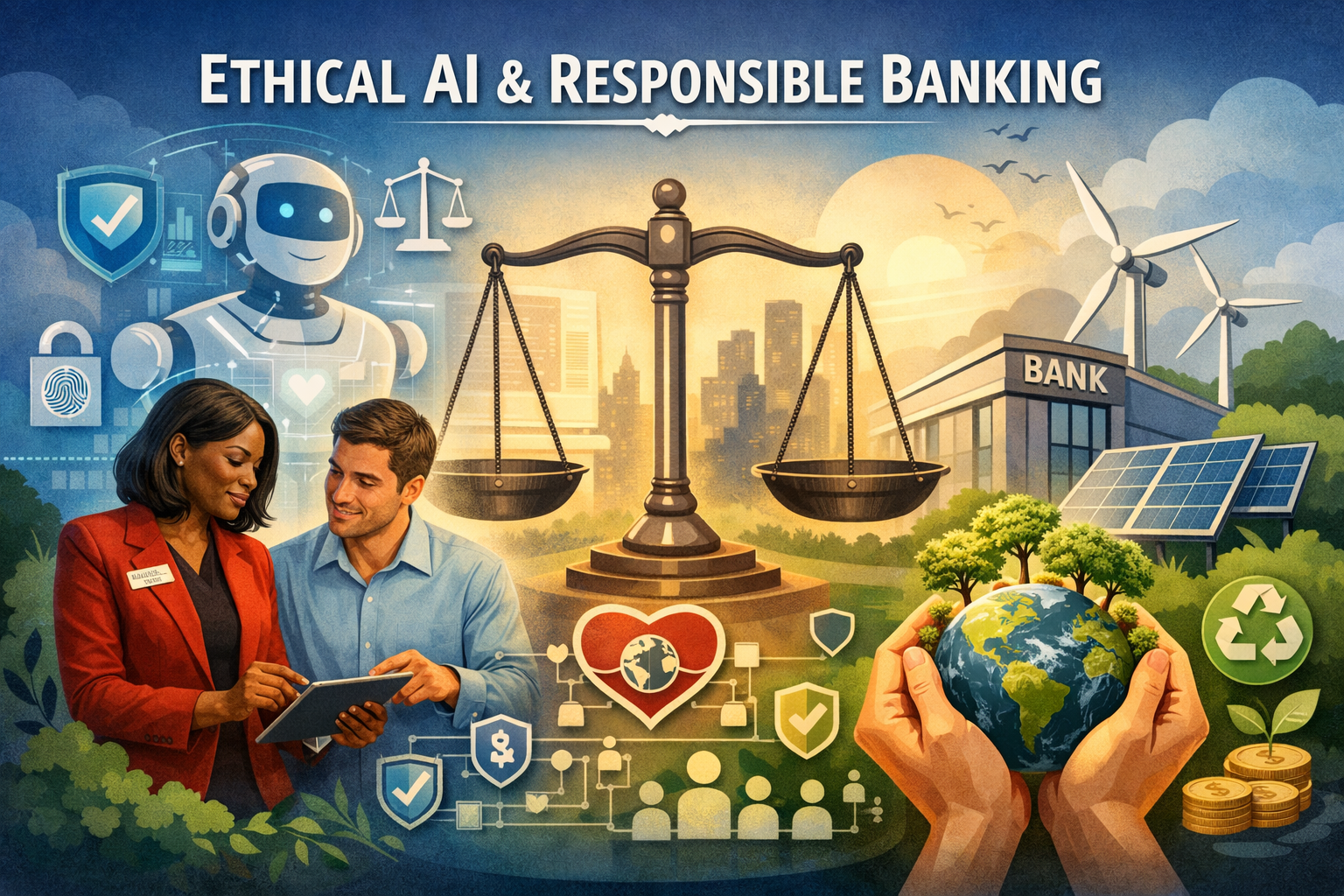
Wells Fargo focuses strongly on responsible AI use.
Avoiding AI Bias
Banks must ensure AI treats customers fairly.
Wells Fargo applies:
- Bias testing algorithms
- Diverse training data
- Human review processes
Transparency in AI Decisions
Customers should understand how AI decisions affect them.
For example:
- Loan approval explanations
- Credit score reasoning
- Risk evaluation transparency
Protecting Customer Privacy
Security systems include:
- End-to-end encryption
- Identity verification systems
- Strict data access controls
Challenges Wells Fargo Faces with AI Agents
Even advanced technology brings challenges.
Integration with Legacy Banking Systems
Banks often use older software systems. Integrating AI requires:
- Complex system upgrades
- Data migration
- Infrastructure modernization
Employee Resistance to Change
Some employees fear AI may replace jobs. Wells Fargo addresses this by:
- Offering AI training programs
- Creating AI-assisted roles
- Encouraging human-AI collaboration
Regulatory Complexity
Financial institutions must follow strict global regulations. AI systems must be audited and approved regularly.
Step-by-Step AI Adoption Strategy (Inspired by Wells Fargo)
Organizations wanting similar AI success can follow these steps:
Identify Business Problems
Focus on tasks that are:
- Repetitive
- Time-consuming
- Data-heavy
Choose the Right Cloud Platform
Cloud platforms like Google Cloud provide scalability and security.
Start with Pilot Projects
Test AI agents in one department before company-wide deployment.
Train Employees
Successful AI adoption depends on employee acceptance and training.
Monitor and Improve AI Performance
AI must be updated continuously using real business feedback.
What’s Next for AI in Banking?
Fully Autonomous B anking Assistants
Future AI agents may handle complete financial planning for customers.
Hyper-Personalized Banking
AI will tailor:
- Interest rates
- Investment portfolios
- Insurance products
Based on individual behavior.
Voice and Multimodal AI Banking
Customers may interact with banks using:
- Voice assistants
- Video AI advisors
- Smart wearable financial assistants
AI-Driven Financial Forecasting
AI agents may predict economic trends and help banks prepare for financial crises.
Actionable Advice for Businesses and Professionals
For Business Leaders
- Invest in cloud infrastructure
- Focus on ethical AI policies
- Build AI training programs
For IT Professionals
- Learn machine learning fundamentals
- Study cloud computing platforms
- Understand AI governance frameworks
For Banking Professionals
- Develop AI literacy skills
- Focus on customer relationship expertise
- Learn data interpretation techniques
Multi-Agent AI Systems
Most people think AI agents work alone. In reality, Wells Fargo uses multi-agent AI ecosystems, where several specialized agents collaborate to complete complex tasks.
What Is Multi-Agent Orchestration?
Multi-agent orchestration means multiple AI agents coordinate to solve problems, similar to a human team working together.
Each AI agent specializes in a specific role.
Example of Multi-Agent Workflow in Banking
Scenario: Mortgage Loan Approval
Instead of one AI system doing everything, Wells Fargo can deploy multiple AI agents:
✔ Data Collection Agent
- Collects customer income data
- Retrieves credit reports
- Verifies identity
✔ Risk Assessment Agent
- Calculates loan risk
- Analyzes debt-to-income ratio
- Evaluates market conditions
✔ Compliance Agent
- Checks regulatory requirements
- Validates legal documentation
- Ensures policy compliance
✔ Customer Communication Agent
- Updates customer about loan status
- Explains required documents
- Provides next steps guidance
AI Technology Stack Used in Google Cloud for Banking
Vertex AI The Core AI Development Platform
Vertex AI allows Wells Fargo to:
- Build machine learning models
- Deploy AI agents
- Monitor AI performance
- Manage large datasets
Why Vertex AI Matters
It provides:
✔ Automated machine learning tools
✔ Model lifecycle management
✔ Real-time analytics integration
✔ Enterprise security compliance
Knowledge Graph Technology
Knowledge graphs help AI agents understand relationships between data points.
Example:
Instead of treating customer data as separate entries, AI can link:
- Transaction history
- Account ownership
- Investment behavior
- Risk factors
This gives AI agents a deeper understanding of customer financial behavior.
Conversational AI Interfaces
Wells Fargo integrates conversational AI into:
- Mobile banking apps
- Customer service chat systems
- Internal employee tools
This allows employees to ask questions like:
“Show me current credit risk trends in small business loans.”
The AI agent provides instant analysis.
Measuring Success-ROI and Business Performance Metrics
AI adoption must show measurable business value. Wells Fargo evaluates AI agent performance using several KPIs.
Productivity Metrics
✔ Time Saved Per Task
AI reduces document analysis time from hours to seconds.
✔ Employee Output Growth
Employees can handle more clients and projects simultaneously.
Financial Metrics
✔ Operational Cost Reduction
Automation reduces manual processing costs.
✔ Revenue Increase
AI identifies upselling opportunities and personalized product offerings.
Customer Experience Metrics
Banks measure:
- Customer satisfaction scores
- Service response time
- Complaint reduction rates
- Customer retention improvement
Risk Reduction Metrics
AI helps reduce:
- Fraud losses
- Compliance violations
- Loan default risks
Workforce Transformation Through AI
AI adoption changes employee roles rather than eliminating them.
New Banking Job Roles Created by AI
AI Risk Analyst
Monitors AI decision accuracy.
AI Compliance Auditor
Ensures regulatory alignment.
Human-AI Collaboration Specialist
Designs workflows combining human and AI tasks.
AI Training Data Manager
Maintains and improves training datasets.
Employee Skill Evolution
Bank employees must now develop:
- Data interpretation skills
- AI interaction knowledge
- Digital process management expertise
Comparing Wells Fargo AI Strategy with Other Global Banks
JPMorgan Chase
JPMorgan uses AI for:
- Algorithmic trading
- Fraud detection
- Investment analytics
However, Wells Fargo focuses heavily on enterprise-wide AI agent workforce transformation, which is a broader strategy.
Bank of America
Bank of America uses the AI assistant Erica, mainly focused on customer interaction.
Wells Fargo’s AI strategy includes:
✔ Employee productivity
✔ Internal workflow automation
✔ Multi-agent orchestration
✔ Advanced compliance monitoring
Goldman Sachs
Goldman Sachs focuses on AI for:
- Investment banking analytics
- Market prediction
- Trading automation
Wells Fargo focuses more on retail and operational AI transformation
AI Governance Framework Used by Wells Fargo
Ethical AI Governance Model
Banks must maintain strict AI governance to ensure responsible usage.
Wells Fargo Governance Includes:
✔ Fairness monitoring
✔ Bias detection
✔ Human approval systems
✔ Transparent AI decision documentation
✔ Regulatory reporting systems
AI Lifecycle Governance
AI Design Review
Risk and compliance teams review AI model design.
Testing and Validation
Models are tested for fairness, accuracy, and safety.
Controlled Deployment
AI agents are released gradually across departments.
Continuous Monitoring
Performance and ethical compliance are continuously evaluated.
Cybersecurity Integration with AI Agents
Security is critical in financial AI systems.
AI-Based Cyber Threat Detection
AI agents monitor:
- Suspicious login patterns
- Network intrusion attempts
- Malware activity
- Identity theft signals
Zero Trust Security Architecture
Google Cloud supports Zero Trust, meaning:
- Every user must verify identity continuously
- Access permissions are tightly controlled
- Sensitive data is encrypted at all stages
The Future AI Banking Ecosystem
Autonomous Financial Ecosystems
Future AI agents may automatically:
- Manage investments
- Optimize savings strategies
- Pay bills intelligently
- Monitor economic trends
Digital Twin Banking
Banks may create AI models representing customers financially.
These digital twins could simulate:
- Spending behavior
- Risk patterns
- Investment opportunities
AI Collaboration Between Banks
Future banking ecosystems may allow AI agents from different banks to collaborate securely for:
- Faster payment settlements
- Fraud intelligence sharing
- Cross-border financial automation
Implementation Blueprint for Enterprises Inspired by Wells Fargo
AI Readiness Assessment
Organizations must evaluate:
- Data quality
- Technology infrastructure
- Workforce skills
- Regulatory environment
Infrastructure Modernization
Cloud migration is essential for scalable AI adoption.
AI Agent Development
Companies must:
- Identify priority automation tasks
- Build specialized AI agents
- Integrate with internal systems
- Cultural Transformation
Organizations must build an AI-friendly culture encouraging employee collaboration with technology.
Key Risks Enterprises Must Prepare For
Over-Automation
Excessive reliance on AI may reduce human oversight.
Model Drift
AI models can become less accurate over time if not updated with new data.
Regulatory Penalties
Financial AI must comply with global banking regulations.
Data Privacy Breaches
Banks must maintain strict data protection frameworks.
Expert Recommendations for Future AI Banking Success
Recommendation 1: Invest in Explainable AI
Banks must ensure AI decisions can be easily explained to regulators and customers.
Recommendation 2: Build Human-AI Collaboration Models
The best results occur when humans and AI work together.
Recommendation 3: Focus on Continuous AI Training
AI systems must be updated regularly with new financial data.
Recommendation 4: Strengthen AI Security Infrastructure
AI systems must include advanced cybersecurity protections.
Final Expert Summary
Wells Fargo’s adoption of Google Cloud AI agents represents a major transformation in modern banking. By implementing multi-agent AI ecosystems, advanced cloud infrastructure, and ethical governance frameworks, Wells Fargo is building a future-ready financial institution.
The integration of AI into daily banking operations demonstrates how financial institutions can enhance productivity, improve customer satisfaction, and reduce operational risks. The strategy also highlights the importance of responsible AI adoption, employee training, and continuous innovation.
As AI technology evolves, Wells Fargo’s model will likely become a global benchmark for enterprise AI transformation across industries.
Conclusion
Wells Fargo’s partnership with Google Cloud demonstrates how AI agents can transform a large financial institution. By automating routine work, empowering employees, and improving customer service, AI agents are redefining what banking looks like in the digital age.
This journey from simple chatbots to powerful AI assistants shows that the future is not about replacing humans, it’s about enhancing human work with smart tools.