
AIS Portal A Complete Guide to Modern Academic Information Systems

Education systems are becoming increasingly complex,AIS Portal A Complete Guide with growing student populations and expanding course offerings. Managing such operations manually is not only time-consuming but also prone to mistakes. The AIS Portal provides a smart, digital alternative that automates repetitive tasks and ensures instant access to critical information.
Students can monitor grades, register for courses, download transcripts, and track attendance without visiting administrative offices. Teachers can upload marks, manage schedules, and communicate with students efficiently. Administrators can generate reports, manage fees, and oversee institutional data securely.
With features like real-time data synchronization, cloud integration, and secure authentication, the AIS portal enhances collaboration and decision-making. It reduces paperwork, increases accountability, and supports data-driven strategies. In short, the AIS Portal transforms traditional education management into a modern, efficient, and technology-driven system.
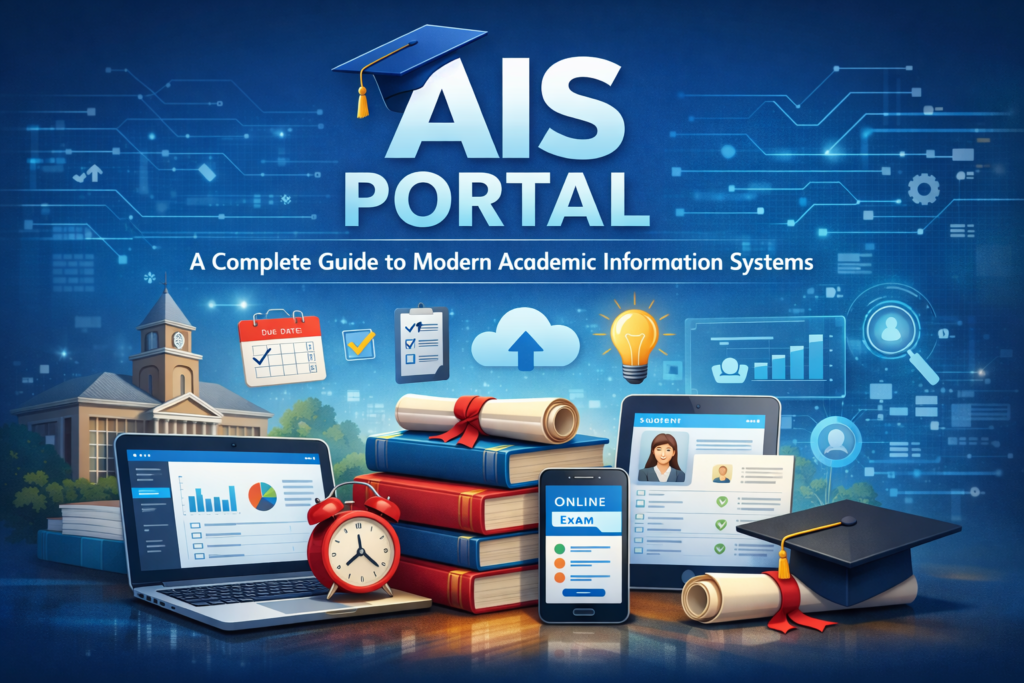
In today’s fast-paced digital era, educational institutions are rapidly transforming the way they manage student data, academic records, and administrative tasks. Gone are the days of manual paperwork, long queues, and slow communication between departments. Students, teachers, and administrators now expect instant access to information, real-time updates, and seamless digital interaction. This is where an AIS Portal (Academic Information System Portal) becomes a powerful solution. Designed to centralize academic operations,
an AIS portal simplifies processes such as admissions, attendance tracking, results management, fee payments, and communication. With secure login systems and cloud-based access, users can manage academic responsibilities from anywhere. Whether you are a student tracking performance or an administrator handling institutional data, the AIS Portal brings efficiency, transparency, and control into one integrated platform.
An AIS Portal stands for Academic Information System Portal, a digital platform developed to manage and streamline educational and institutional operations. It serves as a centralized system where students, faculty, and administrative staff can access important academic data in real time. From course registration and attendance records to examination results and financial transactions, the AIS portal ensures smooth coordination among departments.
Modern educational institutions rely heavily on automation, data security, and cloud-based systems to enhance performance and accuracy. The AIS Portal reduces human errors, improves data management, and increases overall productivity. By offering a secure and user-friendly interface, it supports transparency and efficiency in academic environments.
What Is an AIS Portal?
An AIS Portal is a web-based software platform designed to manage academic and administrative information within an institution. It integrates multiple departments intoAIS Portal A Complete Guide one centralized digital system.
The portal typically includes modules for:
- Student information management
- Faculty management
- Attendance tracking
- Examination and grading
- Fee management
- Communication systems
- Reporting and analytics
By consolidating data into one secure platform, institutions can improve operational efficiency and reduce duplication of work.
Key Features of AIS Portal
The AIS Portal (Academic Information System Portal) is designedAIS Portal A Complete Guide to centralize and streamline academic and administrative processes within educational institutions. Its powerful features ensure efficiency, transparency, and secure data management. Below are the core features that make the AIS Portal an essential digital solution:
1. Student Information Management
Stores student profiles, academic history, and personal data securely.
2. Course Registration
Allows students to enroll in courses online without manual paperwork.
3. Attendance Tracking
Automates attendance records for accurate monitoring.
4. Examination & Results Management
Enables digital grade entry and instant result publishing.
5. Fee Management System
Tracks fee payments, generates invoices, and sends reminders.
6. Communication Tools
Provides announcements, messaging, and notifications.
7. Data Security
Ensures encrypted storage and role-based access control.
8. Report Generation
Generates academic and administrative reports instantly.
Benefits of Using AIS Portal
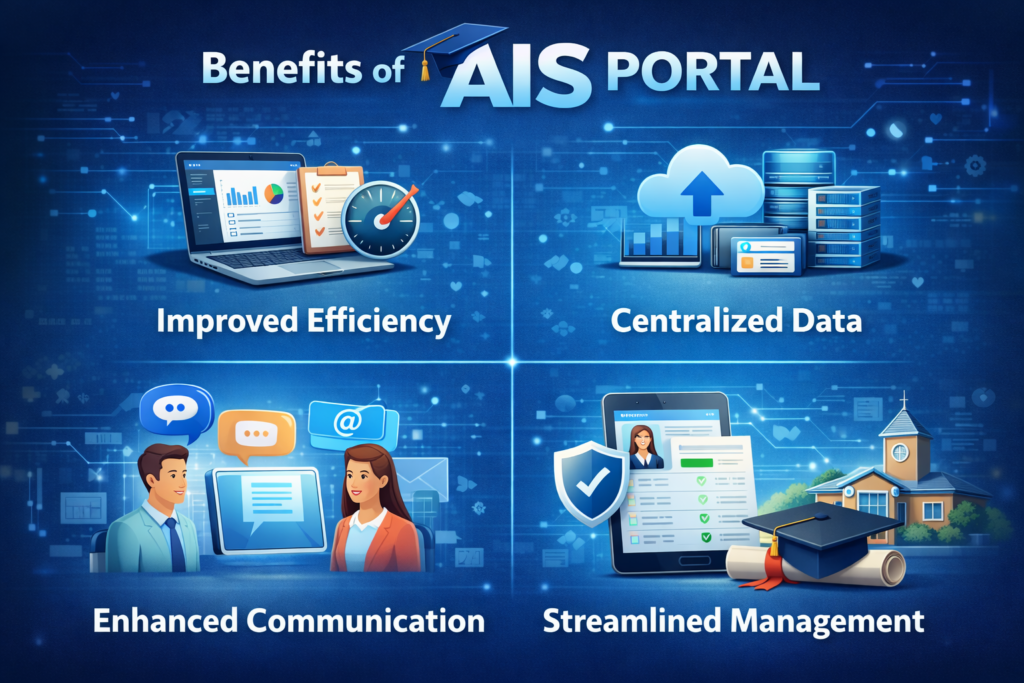
The AIS Portal (Academic Information System Portal) offers numerous advantages that enhance the overall efficiency and transparency of educational institutions. By digitizing AIS Portal A Complete Guide academic and administrative processes, it creates a more organized and technology-driven environment. Below are the key benefits:
1. Improved Operational Efficiency
The AIS Portal automates routine tasks such as attendance tracking, grade AIS Portal A Complete Guide management, fee processing, and report generation, reducing manual workload and minimizing errors.
2. Time-Saving and Accessibility
Students and staff can access academic information anytime and anywhere through secure login credentials. This eliminates long queues and paperwork delays.
3. Enhanced Transparency
With real-time updates on grades, attendance, and financial records, the system ensures clear communication and accountability between students, teachers, and administrators.
4. Better Communication
Integrated messaging and notification systems allow instant sharingAIS Portal A Complete Guide of announcements, schedules, and updates, improving collaboration.
5. Accurate Data Management
Centralized data storage reduces duplication and ensures secure, reliable, and organized record-keeping.
Overall, the AIS Portal supports a modern, efficient, and student-focused educational ecosystem, enabling institutions to operate more effectively in today’s digital world.
How AIS Portal Works
The AIS Portal operates through a secure web-based interface. Users log in using AIS Portal A Complete Guide unique credentials. Based on their role (student, faculty, or administrator), they access specific modules and features.
Data entered into the system is stored in a centralized database and synchronized in real time. Cloud hosting ensures scalability and remote accessibility. Role-based permissions protect sensitive information while maintaining transparency.
Implementation Process of AIS Portal
Implementing an AIS Portal (Academic Information System Portal) requires careful planning, coordination, and execution to ensure long-term success. A structured implementation process helps institutions transition smoothly from manual systems to a fully digital academic AIS Portal A Complete Guide environment. Below are the key steps involved:
1. Requirement Analysis
The first step is to identify the institution’s academic, administrative, and technical requirements. This includes understanding student data management needs, course structures, fee systems, reporting expectations, and security concerns. Clear objectives help in selecting or AIS Portal A Complete Guide developing the right AIS solution.
2. System Design and Customization
Once requirements are defined, the system is configured according to the institution’s structure. Modules such as student management, attendance tracking, examination systems, and fee AIS Portal A Complete Guide management are customized to match institutional workflows.
3. Data Migration
Existing academic records, student profiles, and financial data are securely transferred into the new system. Proper data verification and backup procedures are essential to prevent AIS Portal A Complete Guide information loss or duplication.
4. Testing and Quality Assurance
Before full deployment, the system undergoes rigorous testing to identify bugs,AIS Portal A Complete Guide technical issues, or performance gaps. This ensures smooth functionality after launch.
5. Training and User Onboarding
Faculty, staff, and students receive training sessions, user guides, and technical support to ensure confident usage of the portal.
6. Deployment and Monitoring
After successful testing, the AIS Portal is AIS Portal A Complete Guide officially launched. Continuous monitoring, updates, and performance evaluations help maintain system efficiency and security.
Following a structured implementation process ensures that the AIS Portal operates effectively, securely, and sustainably, delivering long-term value to the institution.
Security Measures in AIS Portal
Security is a top priority for any academic system. The AIS Portal includes:
- Two-factor authentication (2FA)
- Encrypted databases
- Secure cloud hosting
- Regular data backups
- Role-based access control
These measures protect confidential academic and financial data from unauthorized access.
Challenges and Solutions
Implementing an AIS Portal brings significant advantages,AIS Portal A Complete Guide but institutions may face certain challenges during adoption and operation. Understanding these issues and addressing them proactively ensures a smooth and successful transition.
1. Resistance to Change
Many staff members and students may hesitate to shift from manual systems to digital platforms.
Solution: Provide proper training sessions, workshops, and continuous support to AIS Portal A Complete Guide build confidence and encourage adoption.
2. Technical Issues and Downtime
System errors, server downtime, or slow performance can disrupt operations.
Solution: Maintain strong IT support, regular system updates, and reliable cloud hosting to ensure smooth functionality.
3. Data Migration Errors
Transferring old records into the new system may lead to inaccuracies.
Solution: Conduct data verification, testing phases, and backup procedures before full AIS Portal A Complete Guide implementation.
4. Security Concerns
Protecting sensitive academic and financial data is critical.
Solution: Implement encryption, two-factor authentication, and role-based access control to strengthen security.
5. Budget Constraints
Initial setup costs may seem high for some institutions.
Solution: Choose scalable solutions that fit institutional budgets and allow gradual expansion.
By addressing these challenges strategically, institutions can maximize AIS Portal A Complete Guide the benefits of the AIS Portal and ensure long-term success.
Future of AIS Portal
The future of AIS portals includes Artificial Intelligence integration, predictive analytics, mobile app access, and automation enhancements. Institutions will benefit from smarter reporting tools and personalized academic insights.
Frequently Asked Questions
What does AIS Portal stand for?
AIS Portal stands for Academic Information System Portal.
Who can use an AIS Portal?
Students, teachers, and administrators can use it.
Is AIS Portal secure?
Yes, it uses encryption and secure authentication.
Can AIS Portal be accessed remotely?
Yes, it is accessible through web browsers online.
Does AIS Portal reduce paperwork?
Yes, it automates most academic processes.
Conclusion
The AIS Portal represents a major step forward in the digital transformation of education. By centralizing academic data and automating administrative processes, it improves efficiency, transparency, and collaboration across institutions. Students gain real-time access to their academic progress, teachers manage coursework effectively, and administrators oversee operations with accurate reporting tools.
With strong security systems and cloud-based accessibility, the AIS Portal ensures safe and flexible data management. It reduces paperwork, saves time, and enhances communication among all stakeholders. As educational institutions continue to adopt advanced technologies, the AIS portal will remain a cornerstone of smart academic management.
Investing in a reliable AIS Portal is not just about technology it is about building a future-ready, efficient, and student-centered educational environment.