

Laptop Price A Complete Guide to Smart Buying Decisions

In today’s digital world, a laptop is no longer a luxury, it is a necessity. Whether you are a student attending online classes, a freelancer managing remote projects, a gamer chasing high performance, or a business professional handling daily tasks, choosing the right laptop at the right price can significantly impact your productivity and budget. With hundreds of models available, ranging from budget-friendly devices to premium machines, understanding laptop prices can feel overwhelming.
Prices vary depending on specifications, brand reputation, processor type, RAM, storage, and additional features. Without proper research, buyers may overspend or choose underpowered systems. This guide will help you understand pricing categories, influencing factors, and smart buying strategies so you can make an informed decision that balances performance, affordability, and long term value.

The laptop market has evolved rapidly over the last decade. Today, buyers can find laptops ranging from basic entry-level systems to advanced machines built for gaming, content creation, and enterprise solutions. Understanding laptop price categories helps you align your purchase with your needs and financial capacity.
Laptop prices generally fall into three main categories:
- Budget Laptops
- Mid-Range Laptops
- Premium Laptops
Each category offers different performance levels, build quality, and features. Knowing what you are paying for ensures you invest wisely instead of being influenced by branding alone.
Have you ever wondered why two laptops that look similar have drastically different prices? The difference often lies beneath the surface. Components such as processor generation, RAM Laptop Price capacity, SSD storage, graphics card, display quality, battery life, and build materials all influence pricing. Additionally, brand value, after-sales support, and warranty coverage also impact the final cost.
Understanding these factors not only helps you compare options confidently but Laptop Price also prevents common buying mistakes. Let’s explore the essential elements that shape laptop pricing in detail.
Laptop Price Categories Explained
Understanding laptop price categories is essential before making a purchase. The laptop market is generally divided into three main segments: budget, mid range, and premium. Each category offers different specifications, performance levels, and features that directly impact the price.
1. Budget Laptops (Entry Level Range)
Budget laptops are designed for basic tasks such as web browsing, online classes, document editing, and streaming. These devices usually include entry-level processors, 4GB–8GB RAM, and standard storage options. They are affordable and ideal for students or home users who do not require heavy performance.
2. Mid-Range Laptops (Balanced Performance)
Mid-range laptops offer a strong balance between price and performance. They typically feature faster processors, 8GB 16GB RAM, SSD storage, and Full HD displays. These laptops are suitable for office work, multitasking, light gaming, and content consumption.
3. Premium Laptops (High End Performance)
Premium laptops are built for power users, gamers, and creative professionals. They Laptop Pricecome with advanced processors, dedicated graphics cards, high-resolution displays, and superior build quality. Although more expensive, they deliver exceptional speed, durability, and long-term value.
Choosing the right category depends on your needs, usage, and budget.
Factors That Affect Laptop Price
Thelaptop price is not determined randomly; it depends on several technical and market-driven factors. Understanding these elements helps buyers evaluate whether a device truly offers Laptop Price value for money or is simply overpriced due to branding.
Processor (CPU)
The processor is the core component of any laptop. Higher-generation and high-performance CPUs increase speed, multitasking ability, and efficiency. Laptops with advanced processors Laptop Price naturally cost more due to improved performance.
RAM (Memory Capacity)
More RAM allows smoother multitasking and better handling of demanding applications. Devices Laptop Price with 16GB or higher RAM are priced above basic 4GB or 8GB models.
Storage Type and Capacity
SSD storage is faster and more reliable than traditional HDD. Larger SSD capacity significantly increases laptop price but improves performance.
Graphics Card (GPU)
Dedicated graphics cards are essential for gaming, video editing, and design work. Laptops with powerful GPUs are usually more expensive.
Display Quality
Higher resolution screens, OLED panels, and high refresh rates raise the overall cost.
Build Quality and Brand
Premium materials, slim designs, and strong brand reputation also influence pricing.
Understanding these factors ensures smarter and more confident buying decisions.
How to Choose the Right Laptop Based on Price
Choosing the right laptop involves more than just looking at the price tag. You need to match your needs with specific features while staying within your budget. Here’s a professional and practical approach to help you make the best decision based on price and performance.
1. Understand Your Purpose
Start by identifying how you will use the laptop:
- Students: Basic tasks like browsing, studying, and note-taking.
- Professionals: Office applications, presentations, and multitasking.
- Gamers: High graphics and fast processing.
- Content Creators: Video editing, design software, and powerful rendering.
Your purpose determines the performance level you need.
2. Set a Realistic Budget
Laptop prices range from budget to premium:
- Under $500: Basic laptops for everyday tasks.
- $500 – $1000: Mid-range models with better performance.
- Above $1000: Premium devices for advanced use.
Setting a budget helps you filter options efficiently.
3. Compare Specifications
Compare essential specs within your price range:
- Processor: Prioritize newer generations for better speed.
- RAM: Minimum 8GB for everyday use; 16GB+ for heavy tasks.
- Storage: SSD over HDD for faster performance.
- Display: Full HD or higher for clearer visuals.
4. Check Brand Support
Some brands offer better warranty, customer service, and reliability, which adds value to your purchase even if the price is slightly higher.
5. Read Reviews
User reviews and professional benchmarks help assess real-world performance and reliability.
6. Look for Deals
Seasonal sales and online discounts can help you secure higher-end laptops at lower prices.
By considering your needs, budget, and essential features, you can choose a laptop that offers the best balance between price and performance, ensuring a smart and satisfying purchase.
Tips to Get the Best Laptop Price
Finding the best laptop price doesn’t always mean buying the cheapest model; it means getting the best value for your money. Here are practical, professional tips that help you secure a great deal without sacrificing performance or quality:
- Compare Prices Across Multiple Platforms
Before making a purchase, check laptop prices on different online stores and marketplaces. Comparing prices helps you spot the most affordable options for the same model.
- Look for Seasonal Discounts
Major sales events such as Black Friday, Back to School, and holiday promotions often offer significant laptop discounts. Shopping during these periods can save you a substantial amount.
- Consider Refurbished Options
Certified refurbished laptops are often sold at lower prices but still offer good performance and warranty support. They are ideal if you want a high performance device at a reduced cost.
- Check Warranty and Support
A lower price isn’t always better if it comes with poor after-sales service. Ensure the laptop has good warranty coverage; this adds long-term value even if the initial price is slightly higher.
- Avoid Paying Extra for Unnecessary Features
Review the specifications carefully. Don’t pay more for features you won’t use, such as ultra-high refresh rate screens or excessive storage capacity if your work doesn’t require them.
- Use Price Alerts and Comparison Tools
Set price alerts on major e-commerce platforms so you are notified when the laptop you want drops in price.
By applying these tips, you can confidently find the best laptop deals and ensure that your purchase offers maximum performance at the most competitive price.
Online vs Offline Laptop Pricing
When comparing online vs offline laptop pricing, buyers often notice clear differences in cost, variety, and convenience. Understanding these differences helps you decide where to purchase your next device wisely.
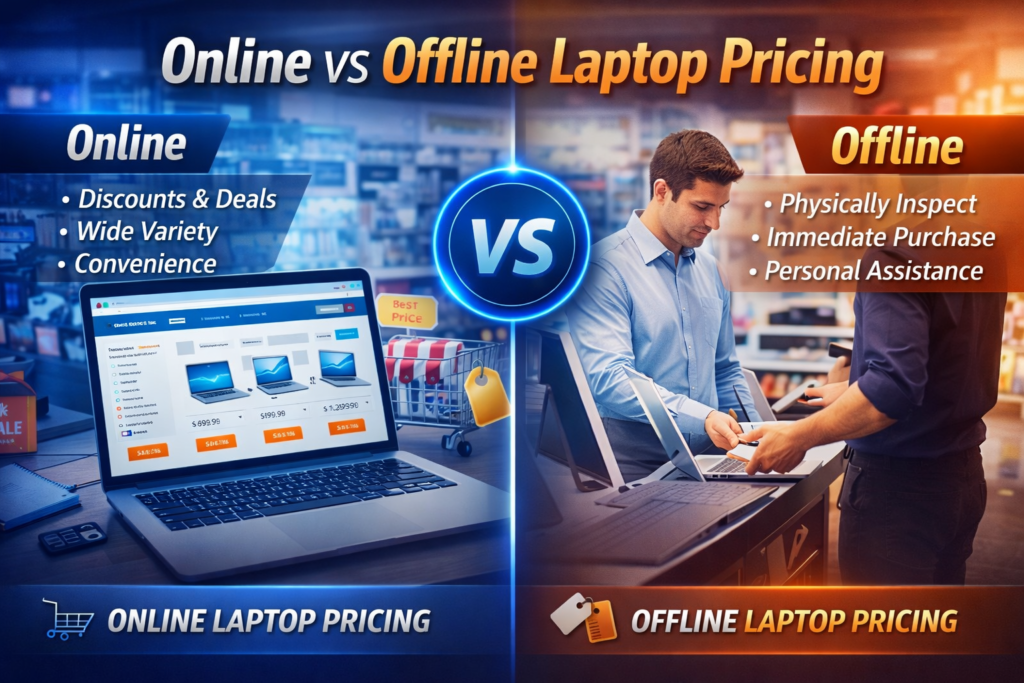
Online laptop pricing is generally more competitive. E-commerce platforms offer frequent discounts, flash sales, and promotional deals that reduce the overall cost. Online stores also have lower operational expenses compared to physical outlets, allowing them to provide better pricing. Additionally, customers can easily compare multiple models, read reviews, and check specifications before making a decision. However, online purchases may involve delivery time and limited hands-on experience before buying.
On the other hand, offline laptop pricing in physical stores may sometimes be slightly higher due to showroom expenses and staffing costs. However, buying offline offers advantages such as immediate product availability, physical inspection, and direct interaction with sales representatives. Some retailers may also negotiate prices or offer bundled accessories.
Ultimately, online shopping provides better price transparency and discounts, while offline stores offer trust, instant ownership, and personalized assistance. Choosing between them depends on your priorities, cost savings or in-store experience.
Future Trends in Laptop Pricing
The future of laptop pricing is poised for dynamic changes as technology evolves rapidly and market demand shifts. One major trend is the increased adoption of advanced components, such as AI-powered processors, high-performance GPUs, and next-generation memory, which may raise baseline prices for cutting-edge models. However, as newer technologies become mainstream, production costs tend to decrease, making previously premium features more affordable over time.
Another trend is the impact of supply chain innovations. With improved semiconductor production and more efficient global logistics, manufacturers may achieve cost savings that can be passed on to consumers. Conversely, geopolitical shifts and material shortages still pose risks of price volatility, especially for specialized components.
Consumers are also showing growing interest in customizable laptops, where pricing depends on selected configurations. This trend empowers buyers to pay only for what they need whether enhanced performance, better displays, or longer battery life rather than a fixed premium.
Moreover, the rise of subscription-based laptop services and leasing options may offer cost-effective alternatives to outright purchase, particularly for students and businesses.
In summary, laptop pricing in the future will balance innovation with accessibility, offering buyers both high-performance machines and budget-friendly options as technology becomes more adaptable and diverse.
Common Mistakes When Buying Based on Price
When purchasing a laptop, many buyers focus only on the price tag and overlook other essential factors. While budget is important, making decisions based solely on cost can lead to disappointment and unnecessary expenses later. Here are some common mistakes to avoid:
Choosing the Cheapest Option Without Checking Specifications
A low price may seem attractive, but it often comes with limited RAM, outdated processors, or slow storage. This can result in poor performance and reduced lifespan.
Ignoring Long Term Value
Some buyers forget to consider durability, battery life, and warranty coverage. Spending slightly more on a reliable device can save repair or replacement costs in the future.
Overpaying for Unnecessary Features
On the other hand, paying extra for high-end graphics or excessive storage—when not required wastes money.
Not Comparing Prices
Failing to compare prices online and offline may cause you to miss better deals or discounts.
Ignoring Reviews and Ratings
User feedback reveals real-world performance and reliability beyond the listed price.
Smart buyers evaluate performance, reliability, and future needs alongside price to ensure a wise investment.
Frequently Asked Questions
What is a good laptop price for students?
$400 $700 suits basic study needs.
Are expensive laptops worth it?
Yes, for gaming or professional tasks.
Is an SSD better than a HDD?
Yes, an SSD is faster and more reliable.
How much RAM is enough?
8GB works for daily tasks.
Do laptop prices drop often?
Yes, during sales seasons.
Conclusion
Understanding laptop price dynamics is essential for making a smart and confident purchase decision. Price alone should never be the only factor guiding your choice. Instead, buyers must carefully evaluate performance, specifications, durability, brand reliability, and long-term value before investing in a device. From entry-level models designed for basic tasks to high-end machines built for gaming and professional work, each price category serves a specific purpose.
Modern buyers also have the advantage of comparing online and offline pricing, tracking seasonal discounts, and exploring refurbished or customized options. By researching thoroughly and aligning your needs with your budget, you can avoid common purchasing mistakes and ensure maximum return on investment.
As technology continues to evolve, laptop pricing will become more flexible, offering better features at competitive rates. However, informed decision-making will always remain the key to satisfaction. A well-chosen laptop is not just an expense, it is a long-term productivity tool that supports learning, creativity, and professional growth. Choose wisely, compare carefully, and invest in a device that truly matches your goals and expectations.